
DMS Regulations, Euro NCAP & Validation Challenges
Between DDAW (drowsiness), ADDW (distraction) and Euro NCAP requirements, Driver Monitoring System validation is shifting toward real-world performance measurement.
DMS is critical. Validation must evolve.
DMS / CONTEXT
From feature to safety-critical system
Driven by regulation, L2+ driving and rising safety expectations
Driver Monitoring Systems are no longer secondary features. They are now core safety components, expected to reliably detect driver attention, distraction and drowsiness in real-world conditions.
- Mandatory for compliance with GSR2 regulations
- Essential for safe L2+ driver engagement
- Direct impact on user trust and system acceptance
DMS is now a central component of modern ADAS architectures.
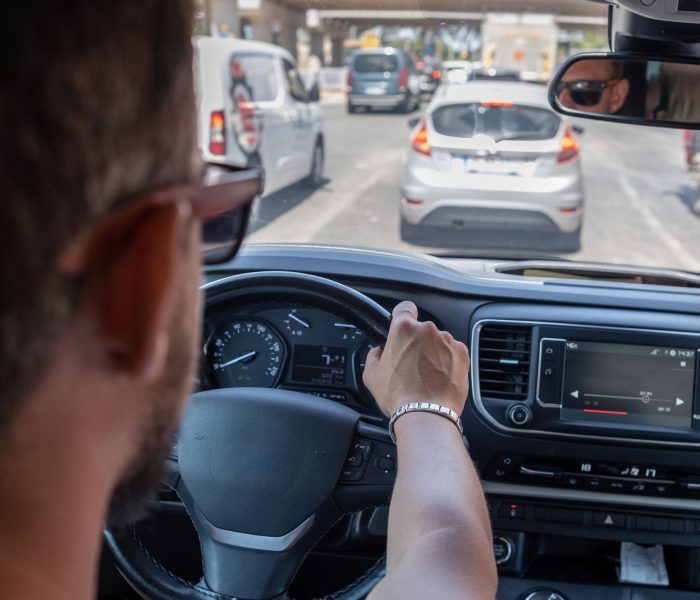
The challenge is not only to detect —
but to measure performance reliably in real-world conditions
REGULATION
Regulation is redefining validation
From compliance to measurable real-world performance
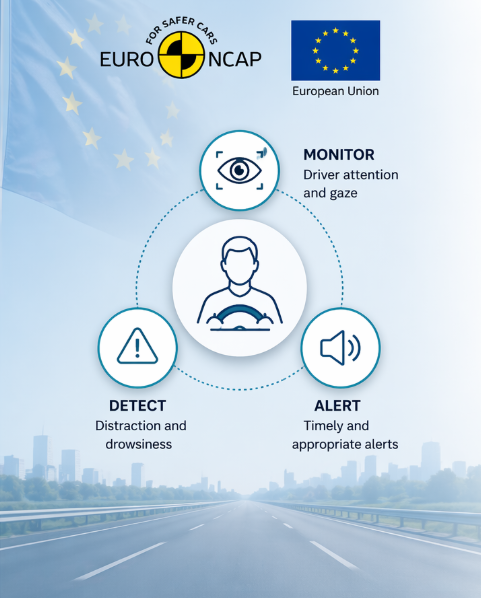
European regulations and safety programs such as :contentReference[oaicite:1]{index=1} are transforming how Driver Monitoring Systems must be evaluated.
- GSR2 mandates the integration of driver monitoring systems across new vehicles in Europe :contentReference[oaicite:2]{index=2}
- DDAW requires reliable detection of driver drowsiness and fatigue :contentReference[oaicite:3]{index=3}
- ADDW introduces driver distraction and gaze monitoring requirements :contentReference[oaicite:4]{index=4}
- Euro NCAP 2026 shifts evaluation toward driver engagement and real-world performance, requiring eye and head tracking and system response to driver state :contentReference[oaicite:5]{index=5}
For detailed protocols and engineering guidelines, refer to the official :contentReference[oaicite:6]{index=6}.
Validation is no longer about system presence — it is about performance in real conditions.
SYSTEM INTEGRATION
DMS is no longer an isolated system
Tightly coupled with ADAS and L2+ driving functions
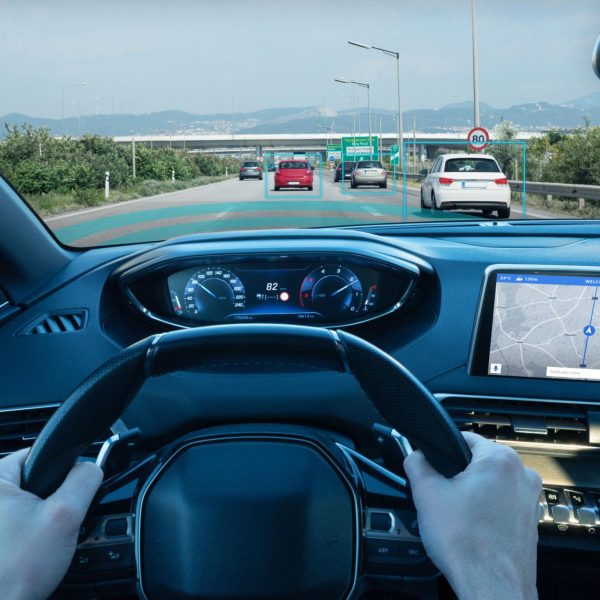
Driver Monitoring Systems are now embedded in a broader ADAS architecture, interacting with perception, decision and control systems.
- Driver attention directly influences ADAS behavior
- L2+ requires continuous monitoring of driver engagement
- Performance depends on both environment and driver state
DMS validation is no longer component-level — it is system-level.

REAL-WORLD VALIDATION
Validation must reflect real-world conditions
Driver behavior and environment are inherently dynamic
- Lighting variability (day, night, glare, reflections)
- Driver diversity (behavior, posture, attention)
- Continuous interaction between driver, vehicle and environment
Reliable DMS performance depends on real-world validation.
Validation Gap
Bridging the gap in DMS validation
Current approaches do not cover the full validation chain
DMS validation today relies on a combination of heavy instrumentation and fragmented environments, limiting the ability to achieve consistent, scalable and real-world performance evaluation.
Validation Gap
Bridging the gap in DMS validation
Current approaches do not cover the full validation chain
DMS validation today relies on a combination of heavy instrumentation and fragmented environments, limiting the ability to achieve consistent, scalable and real-world performance evaluation.
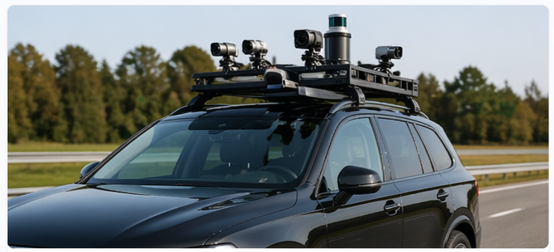
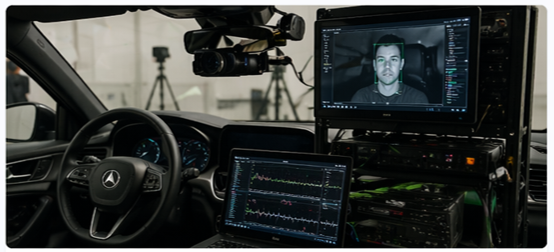
Heavy ground-truth instrumentation
Roof-based systems provide valuable measurements but remain intrusive, costly and difficult to deploy at scale in real driving conditions.
Intrusive Expensive Hard to scale Limited flexibility
Heavy ground-truth instrumentation
Roof-based systems provide valuable measurements but remain intrusive, costly and difficult to deploy at scale in real driving conditions.
Fragmented DMS validation setups
Existing DMS environments enable functional testing but lack synchronization with real-world ground-truth and multi-ADAS scenarios.
Fragmented Not synchronized Partial coverage Hard to correlate
Fragmented DMS validation setups
Existing DMS environments enable functional testing but lack synchronization with real-world ground-truth and multi-ADAS scenarios.